Launching Masteos's Project Tracking MVP
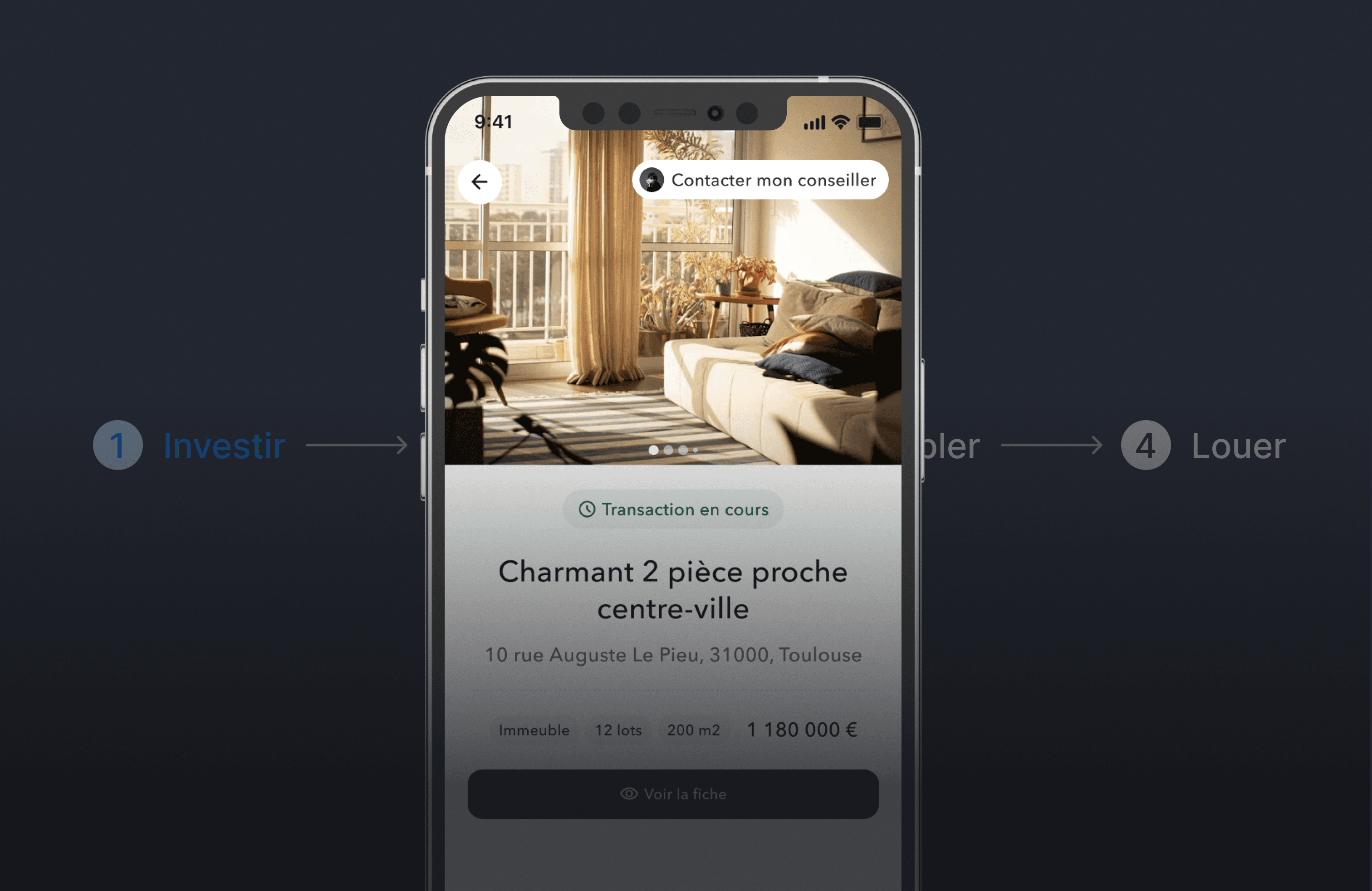
Masteos takes care of all the steps of your real estate investment : Investment, renovation, furnishing and rental management. All in one place. This case study showcases how we worked on the project-tracking MVP with limited ressources and time. The team consisted of 2 product managers, 2 designers and 2 developers. The project had to be shipped in 3 months. Let’s take a look.
I. Challenge
Enhance the experience
Investors lacked any real-time visibility into project milestones. This resulted in user anxiety, eroded trust, and a spike in frustration.
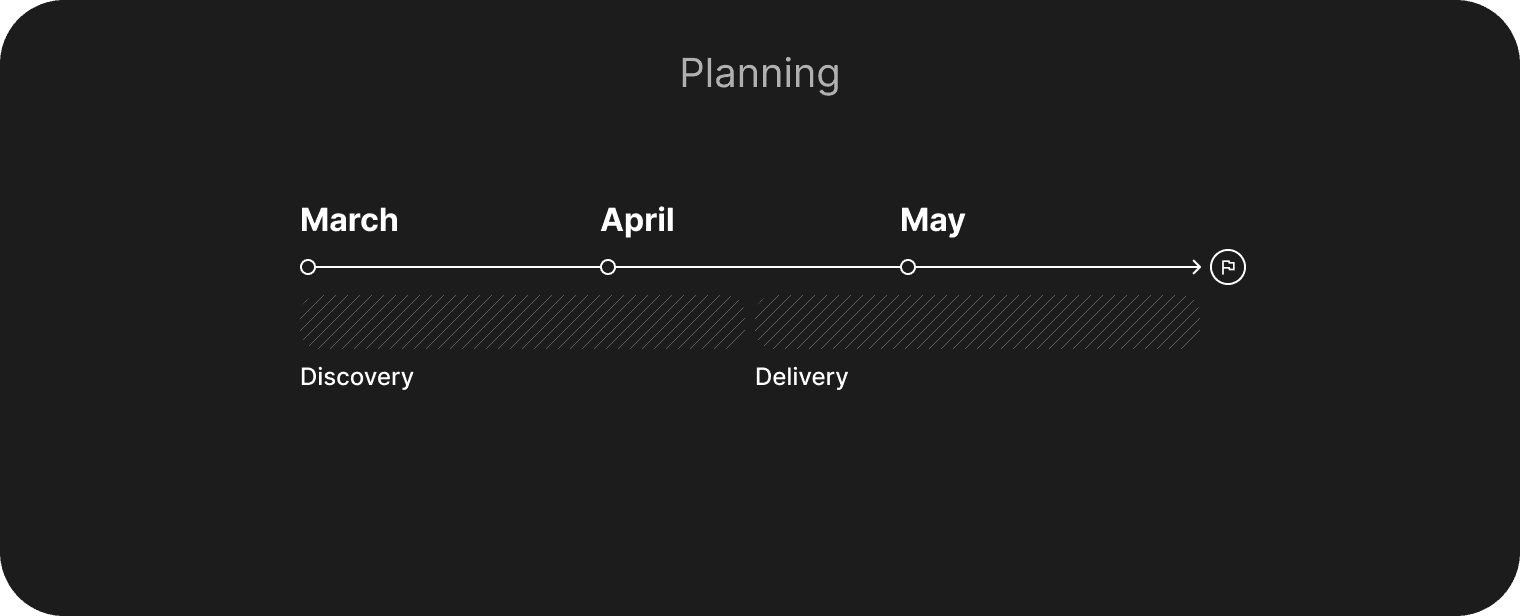
My role, alongside the team was to design and ship a project-tracking MVP in 3 months. The challenge wasn't just to move fast it was to lay a solid, scalable foundation without accumulating technical or design debt.
II. Process
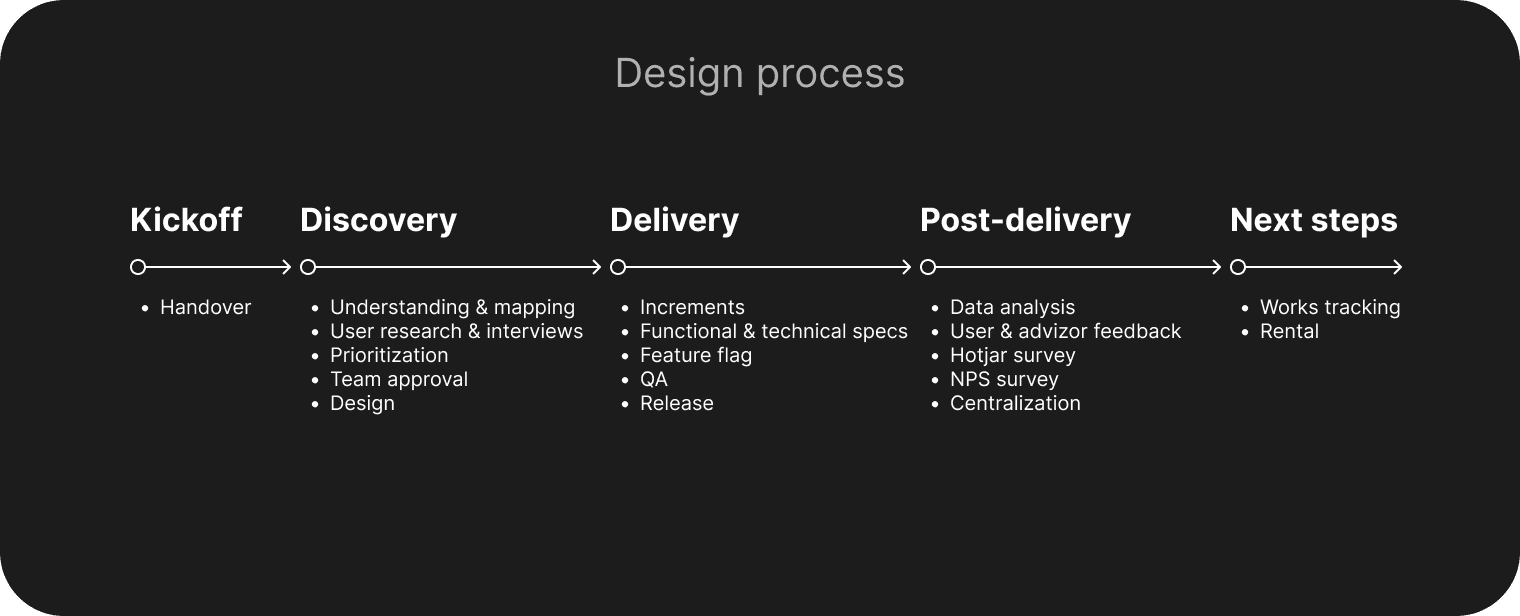
Design process
Guided by the five stages of Design Thinking to prioritize user empathy, pricing clarity, and sustainable trust-building for lasting conversions.
III. Research
Meaningful impact
By structuring user journeys and validating assumptions early, this stage strengthens alignment with real needs.
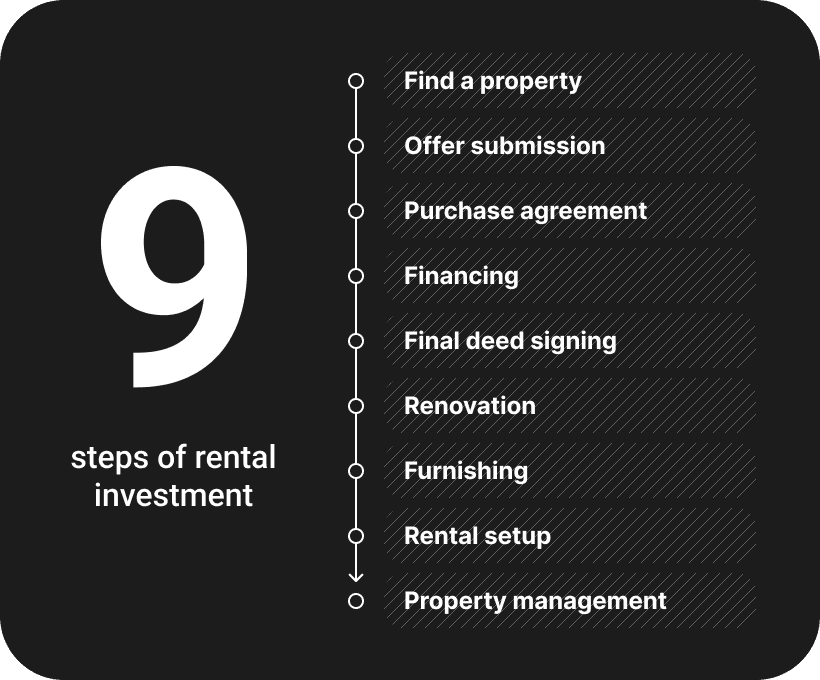
Understanding and mapping of rental investment
How rental investment works, advizor interviews, major steps, under-steps, simplify, necessary documents, who intervines, when, investment time length (6-7 months), finance search (usually around 70 days).
User research & interviews
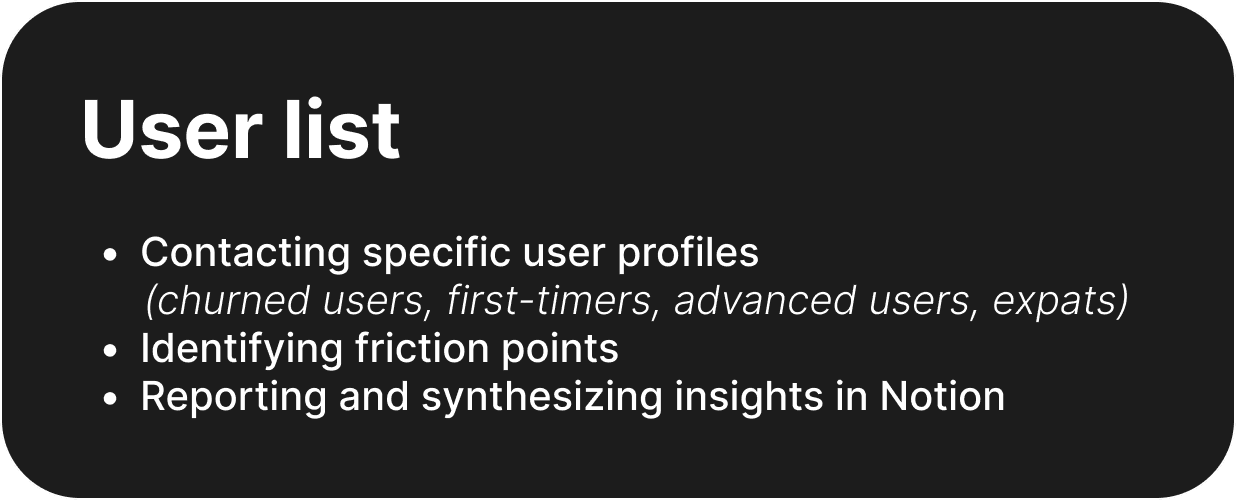
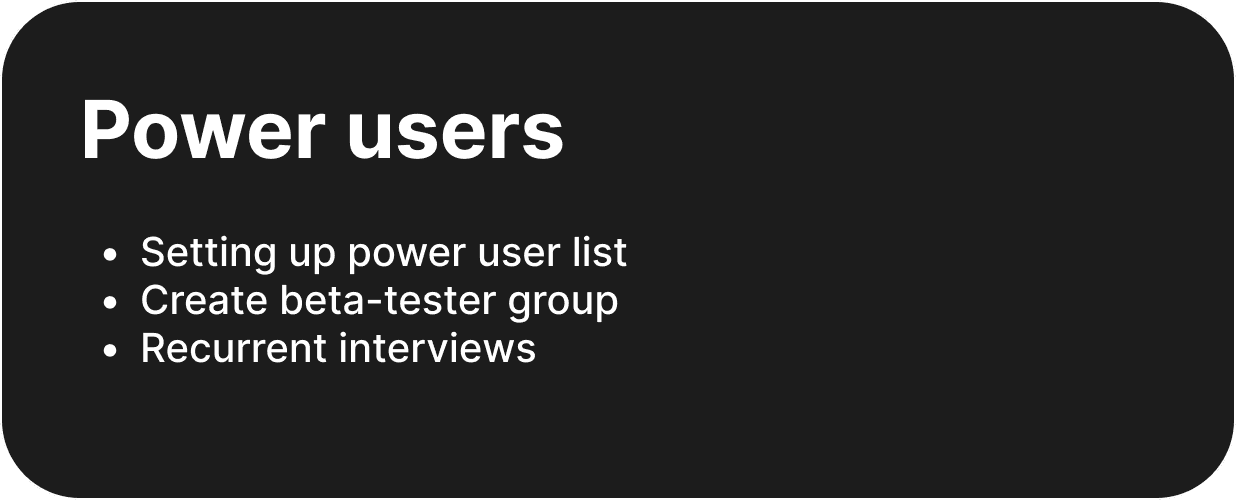
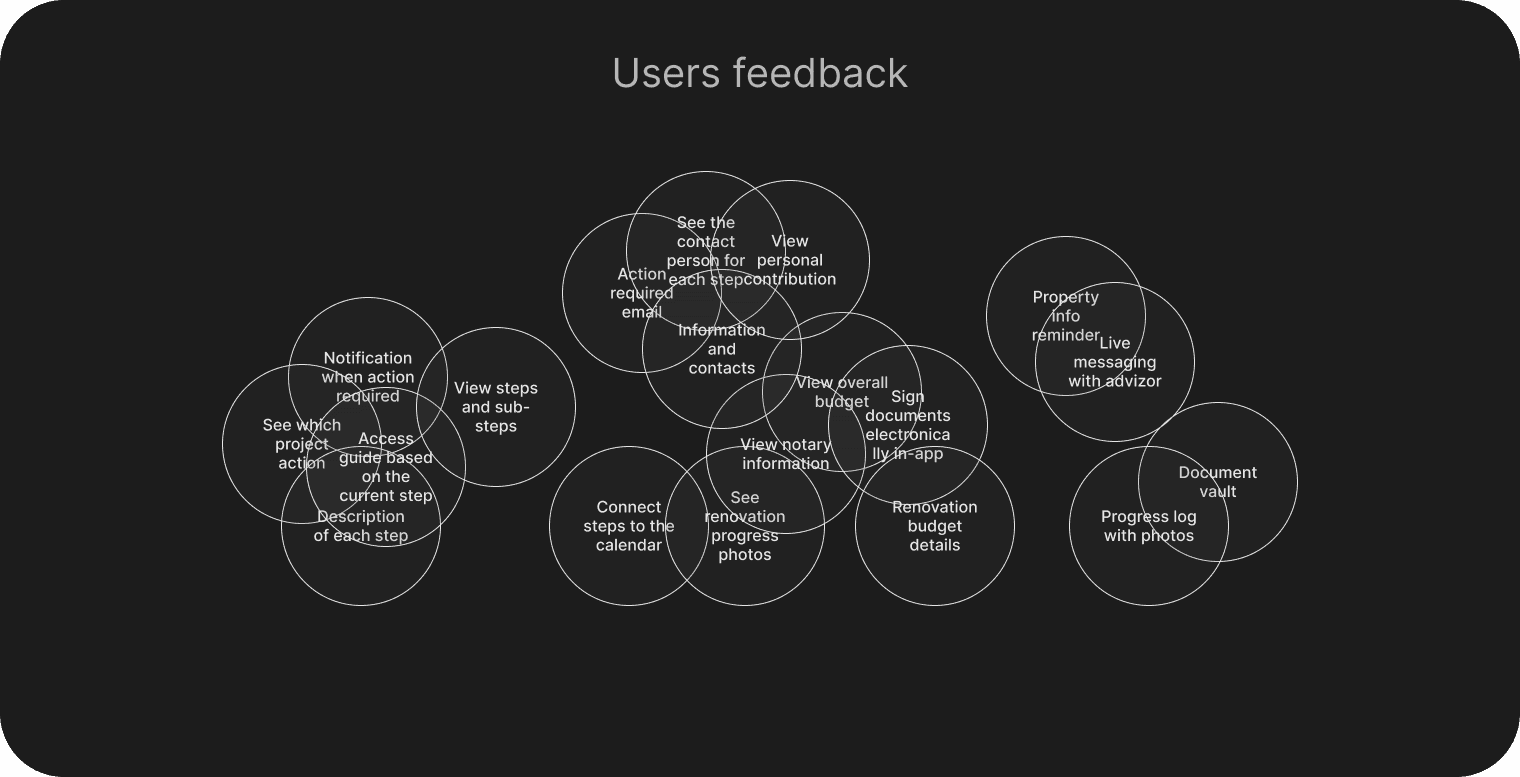
Understand painpoints, churn rate, exchange, list power users, create beta tester’s base list, interviews, need list.
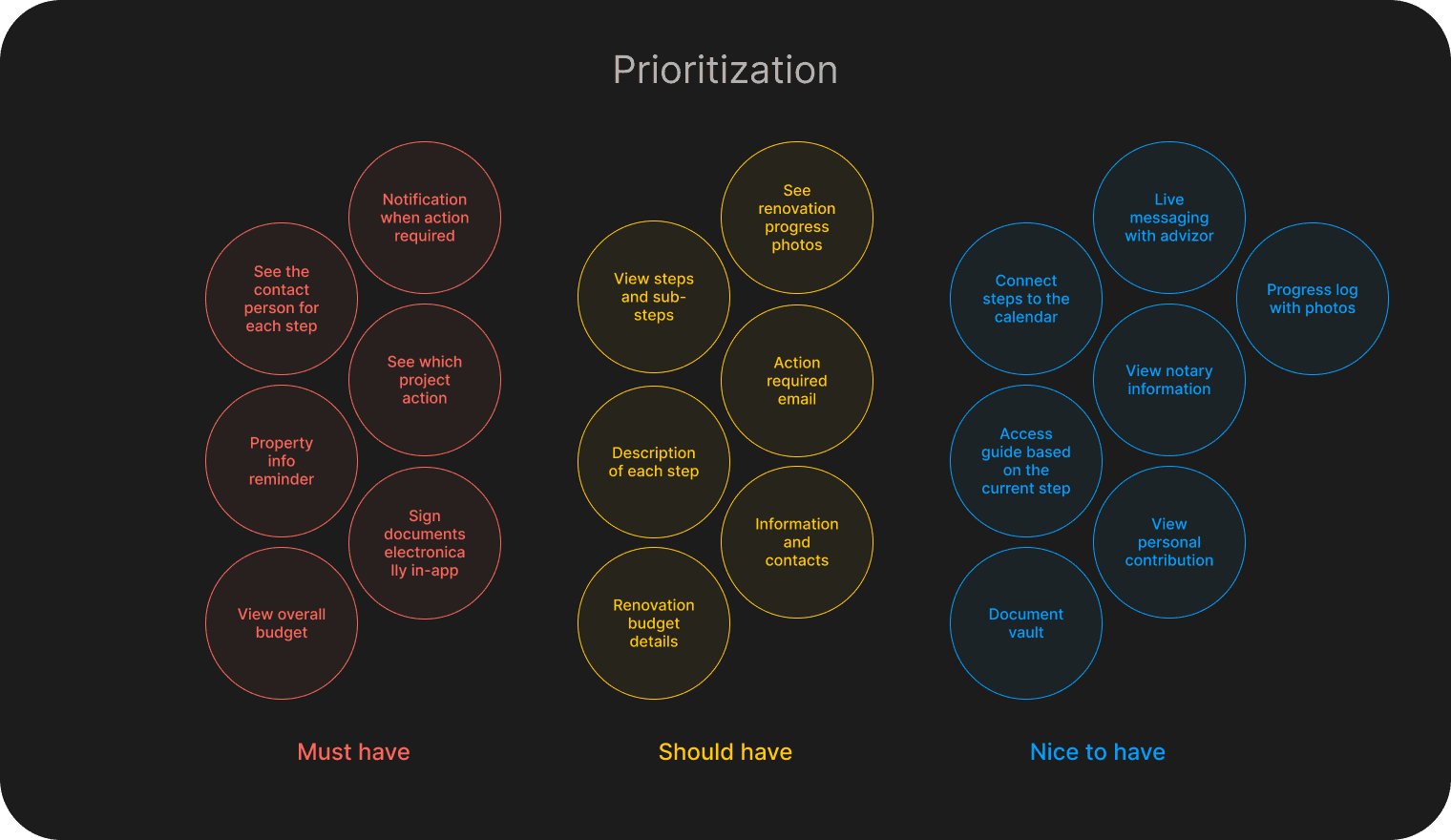
IV. Design
Concepts to execution
This section tracks the design evolution across MVP versions, from early wireframes used to validate structure and flows, to the final UI refined through iterations, testing, and alignment with future product needs.
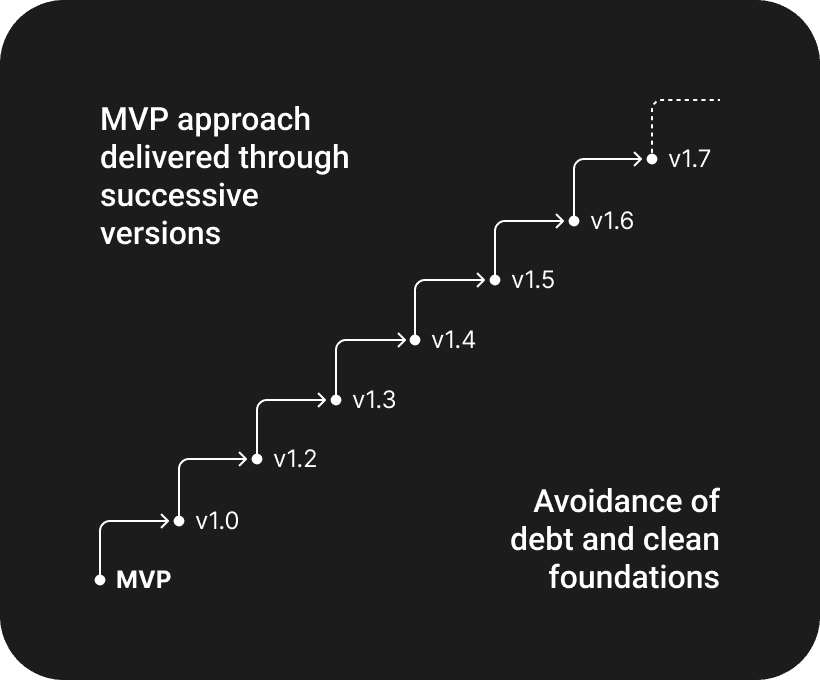
Versions & incremental approach
Design the MVP as a scalable foundation: v1.0 focuses on core functionality, while v1.7 builds on it with more advanced features, anticipating future needs and preventing technical debt.
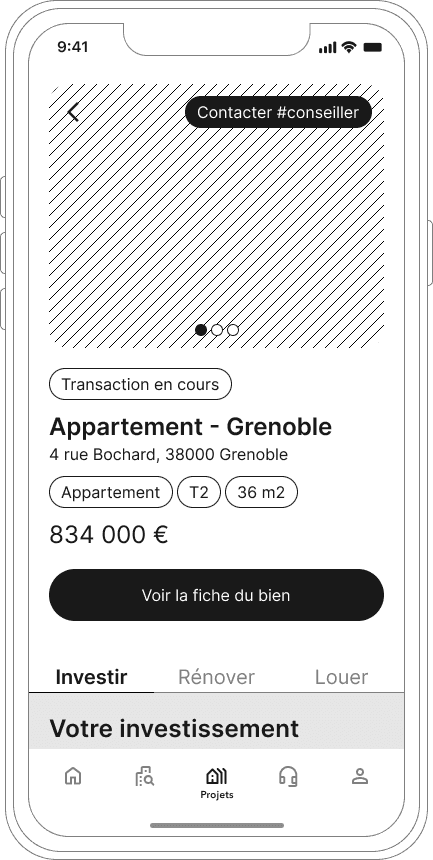
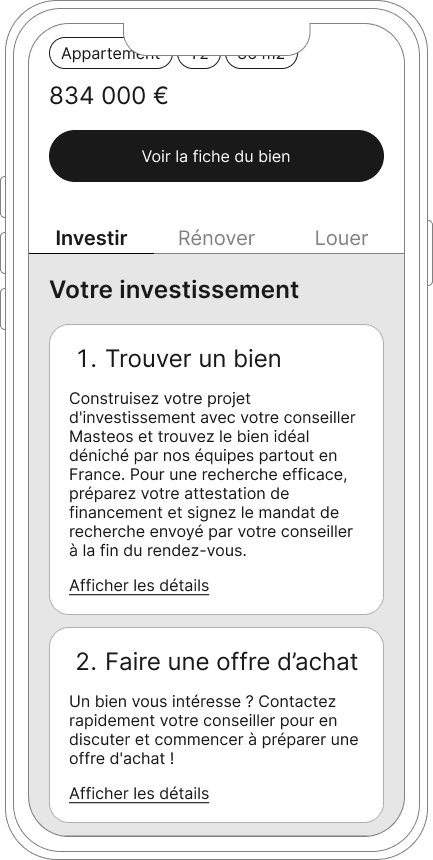
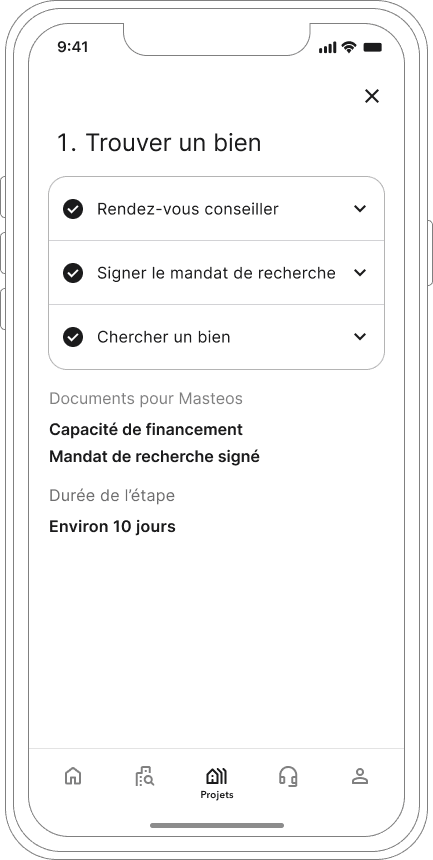
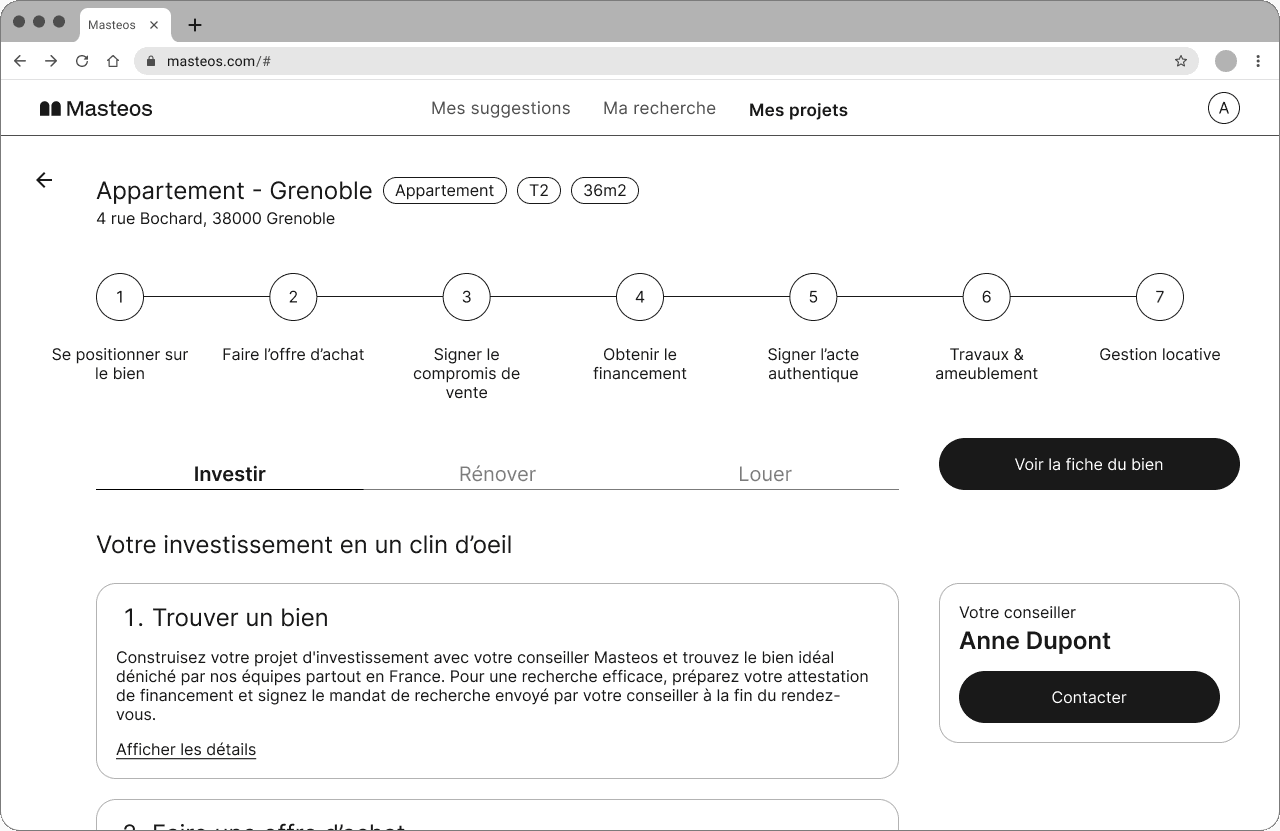
Concepts
Validating ideas through low-fidelity design.
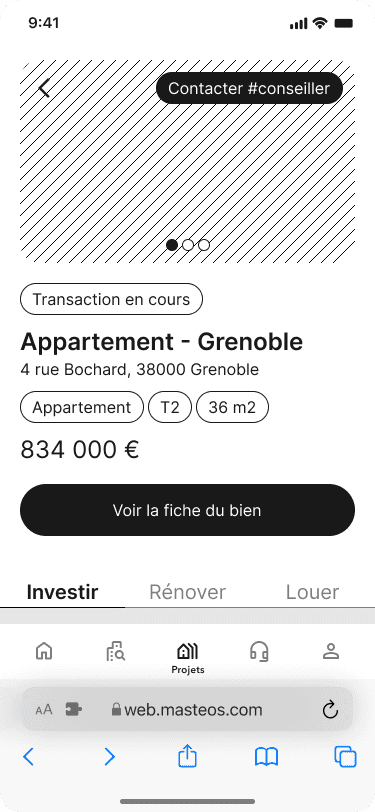
Final shape
High fidelity designs shaped with future in mind offering strong foundation to build upon.
V. Conclusion
End of beginning
Data analysis, user and advizor feedback centralization.
Learnings
-Integrating developers as soon as possible in the process for precious feedback.
-Data monitoring
-Addition of a regular interviewing process
-Centralization of user and advizor feedback
Next steps
Starting from scratch almost was a challenge but we managed to deliver in time and with now a foundation to build upon we knew it would be a success. Next steps like work progress tracking and integration of rental features would guide